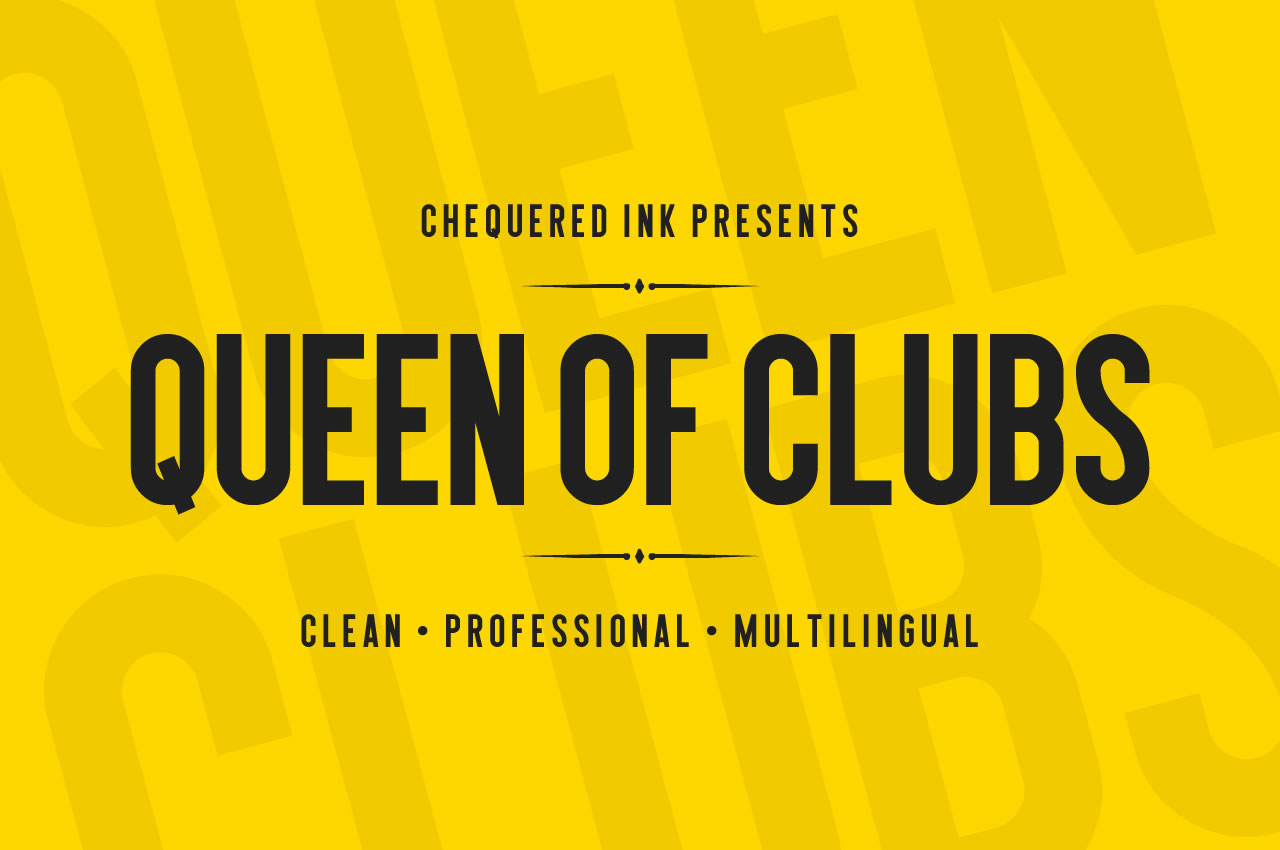
Queen of Clubs: A Versatile and Professional Sans Serif Font
Queen of Clubs is a modern, professional sans serif font that stands out for its clean lines, elegant curves, and broad language support. Designed with a focus on readability and versatility, it caters to a wide range of design needs, from branding and editorial work to digital interfaces and print materials. Its balanced structure and refined aesthetics make it a compelling choice for designers looking for a font that is both functional and visually appealing.
What sets Queen of Clubs apart is its attention to detail and the thoughtful balance between simplicity and sophistication. The font maintains a consistent weight and spacing, ensuring legibility at various sizes and in different contexts. This makes it particularly well-suited for projects that require clarity without sacrificing style.
Key Features of Queen of Clubs
One of the most notable aspects of Queen of Clubs is its comprehensive support for European languages and beyond. This includes extended character sets for French, German, Spanish, Italian, and other widely spoken languages, making it an excellent option for international projects or multilingual content. The font also includes glyphs for common symbols and special characters, enhancing its usability in a variety of design scenarios.
The curvy yet tidy nature of Queen of Clubs gives it a soft, approachable feel while maintaining a professional edge. This combination makes it suitable for both corporate and creative applications. Whether used in headings, body text, or logos, the font adapts well to different typographic needs without losing its identity.
Queen of Clubs is available in multiple weights, allowing users to create visual hierarchy and add depth to their designs. This flexibility ensures that the font can be used effectively in everything from minimalistic layouts to more complex compositions.
How Queen of Clubs Compares to Other Sans Serif Fonts
When compared to other popular sans serif fonts, Queen of Clubs offers a unique blend of elegance and practicality. Fonts like Helvetica, Arial, and Roboto are widely used for their neutrality and universality, but they may lack the subtle personality that Queen of Clubs brings to the table. While these fonts are highly versatile, they often prioritize uniformity over individuality, which can result in a more generic look.
Fonts such as Montserrat and Open Sans are known for their modern, clean appearance and strong web performance. They are frequently chosen for digital interfaces due to their optimized screen rendering. Queen of Clubs, while also suitable for digital use, has a slightly more refined and polished aesthetic that can elevate the visual appeal of a design without compromising readability.
In contrast to more decorative or script-based fonts, Queen of Clubs remains grounded in functionality. It avoids the complexity and potential legibility issues that can come with more stylized typefaces. This makes it a reliable choice for projects where clarity and professionalism are key considerations.
Strengths and Best Use Cases for Queen of Clubs
Queen of Clubs excels in situations where a clean, professional look is required. It is particularly effective in branding materials, such as logos, business cards, and stationery, where a consistent and memorable visual identity is essential. The font’s ability to maintain clarity at small sizes also makes it a good fit for infographics, charts, and data visualization projects.
For editorial design, Queen of Clubs provides a modern alternative to traditional serif fonts. Its sans serif structure allows for easy reading in long-form text, while its subtle curves add a touch of refinement. This makes it a suitable choice for magazines, newsletters, and other publications that aim to strike a balance between readability and visual interest.
In digital environments, Queen of Clubs performs well across various platforms and devices. Its open letterforms and even spacing contribute to a smooth reading experience, especially on screens with lower resolution. This makes it a viable option for websites, mobile apps, and other digital interfaces where typography plays a critical role in user engagement.
Tradeoffs and Limitations
While Queen of Clubs is a strong contender in the world of sans serif fonts, it may not be the best fit for every project. Its relatively restrained style may not appeal to those seeking a bold or unconventional typographic expression. In cases where a more distinctive or eye-catching font is needed, alternatives with bolder strokes or more dramatic shapes might be more appropriate.
Another consideration is the font’s availability. Unlike some of the more widely used sans serifs, Queen of Clubs may not be pre-installed on all systems, requiring users to download and install it separately. This could be a minor inconvenience for those working in environments where font access is limited or controlled.
Additionally, while Queen of Clubs supports a wide range of languages, it may not include all the specialized characters required for certain niche applications. Users working with less common languages or scripts should verify the font’s coverage before relying on it for critical projects.
When to Choose Queen of Clubs
Queen of Clubs is an ideal choice for designers who value a balance between aesthetics and functionality. It is particularly well-suited for projects that require a professional yet approachable look, such as corporate communications, educational materials, and marketing collateral. Its versatility makes it a go-to option for designers who want a font that can adapt to different styles and formats without losing its core identity.
If you're working on a project that demands a clean, modern typeface with strong language support, Queen of Clubs is worth considering. It offers a reliable and elegant solution that can enhance the visual appeal of your work while maintaining readability and consistency.
Alternatives to Consider
For those looking for similar options, there are several fonts that offer comparable features and benefits. For example, Lato and Raleway are both popular sans serif fonts known for their clean design and broad language support. These fonts may be preferable if you’re looking for a slightly more geometric or minimalist style.
If you prefer a font with a stronger personality, fonts like Futura or Bebas Neue provide a more distinct visual identity. However, these fonts may not offer the same level of subtlety and refinement as Queen of Clubs, making them better suited for specific design contexts.
Ultimately, the best font for your project will depend on your specific needs, design goals, and the message you want to convey. Exploring a range of options and testing them in real-world scenarios can help you find the right fit for your work.