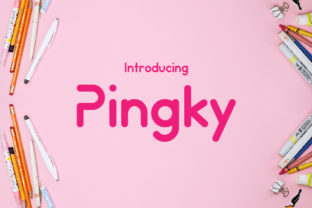
Pinky: A Fun, Legible Sans Serif Font
If you're looking for a font that combines charm with clarity, Pinky might be just what you need. This sans serif typeface is designed to be highly legible while adding a playful touch to your designs. Whether you're working on a logo, a headline, or a website, Pinky offers a fresh and friendly alternative to more rigid or formal fonts.
With its clean lines and rounded edges, Pinky feels approachable and modern. It doesn't have the strict structure of a traditional serif font, nor the fluidity of a script or handwritten style. Instead, it sits somewhere in between—offering a balance between readability and personality. This makes it ideal for projects that want to feel both professional and inviting.
Where Pinky Shines
Pinky works best in contexts where a bit of character is needed without sacrificing clarity. For example, in logo design, it can add a light-hearted tone that still feels trustworthy. In editorial design, such as newspapers or magazines, it can serve as a secondary headline font, offering visual contrast without overwhelming the reader.
In web design, Pinky can be used for call-to-action buttons, headings, or even body text if paired correctly. Its simplicity ensures it won’t clash with other design elements, and its friendly appearance can help create a more engaging user experience. For social media graphics, Pinky’s legibility at smaller sizes makes it a great choice for captions, quotes, or promotional messages.
When it comes to packaging design, Pinky can give products a more personable look, especially for brands targeting younger audiences or those with a creative or lifestyle focus. It also pairs well with other fonts, making it a versatile addition to any designer’s toolkit.
How Pinky Influences Design
Readability is one of Pinky’s strongest assets. Unlike some display fonts that prioritize style over function, Pinky maintains a high level of legibility even at smaller sizes. This makes it suitable for a wide range of applications, from print to digital formats.
In terms of visual hierarchy, Pinky can help guide the viewer’s eye through a design. Its consistent stroke width and open counters make it easy to read, which is essential when using it for headings or subheadings. When paired with a more serious or structured font, it can create a balanced and dynamic layout.
From a brand perception standpoint, Pinky can communicate a sense of friendliness and creativity. It’s not too casual to be unprofessional, nor too formal to feel out of place in a modern setting. This makes it a good fit for businesses that want to appear approachable while still maintaining a polished image.
Choosing the Right Font for Your Project
Before selecting Pinky, consider the tone and purpose of your project. If you're designing for a corporate or legal audience, Pinky may not be the best fit. However, for creative, lifestyle, or youth-oriented brands, it can be an excellent choice.
Testing different font pairings is key to finding the right look. Try pairing Pinky with a bold sans serif for a modern, clean aesthetic, or with a slightly more decorative font for a more eclectic feel. Always test your chosen combinations at the actual size they’ll be used to ensure readability and visual harmony.
Reviewing the font’s styles is also important. Does it include weights like regular, bold, or italic? Are there alternate characters or ligatures that could enhance your design? These details can make a big difference in how the font performs across different applications.
Practical Tips for Using Pinky
When using Pinky in print, keep in mind that smaller sizes may require adjustments to spacing or line height to maintain legibility. For web use, ensure that the font is properly embedded and that fallback fonts are set up in case the browser doesn’t support it.
For commercial projects, check the licensing terms to make sure you’re allowed to use Pinky in your specific context. Some fonts come with restrictions on resale, modification, or redistribution, so it’s always wise to review the license agreement before finalizing your design.
Finally, don’t be afraid to experiment. Pinky’s versatility means it can work in many different scenarios. Try it in a variety of layouts and see how it interacts with other design elements. You might find that it becomes one of your go-to fonts for a wide range of projects.