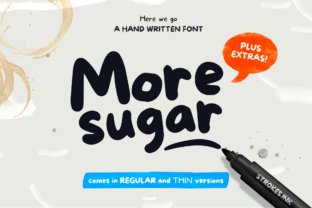
More Sugar: A Handwritten Font That Brings Joy to Design
In the world of design, where trends evolve rapidly and visual communication is more important than ever, fonts play a crucial role in conveying tone, emotion, and brand identity. Among the many typefaces available, More Sugar stands out as a unique and expressive handwritten font that brings a sense of warmth, playfulness, and personality to any project. With its natural strokes and casual feel, More Sugar is not just a font—it's a creative tool that resonates with modern designers, entrepreneurs, and marketers who are looking for ways to stand out in a crowded market.
More Sugar is more than just a typeface; it’s a reflection of current design trends that prioritize authenticity, approachability, and emotional connection. In an era where consumers are increasingly drawn to brands that feel human and relatable, this font offers a fresh alternative to the rigid, often impersonal digital typography that dominates many industries. Whether used in packaging, branding, or digital marketing, More Sugar has the power to transform a simple message into something memorable and engaging.
The Rise of Handwritten Typography in Modern Design
Handwritten fonts have seen a significant rise in popularity over the past few years, driven by a broader shift in design aesthetics toward organic, personal, and tactile elements. This trend aligns with the growing demand for content that feels genuine and unfiltered, especially in the digital space where authenticity can be hard to come by. More Sugar fits perfectly into this movement, offering a font that feels like it was written by hand—complete with subtle imperfections and natural flow that add character and depth.
This style of typography is particularly appealing in industries such as food and beverage, lifestyle, and children’s products, where a friendly and approachable image is essential. For example, a coffee shop might use More Sugar on its packaging to evoke a sense of comfort and familiarity, while a toy brand could use it to create a playful and inviting look that appeals to both kids and parents.
The appeal of handwritten fonts also extends to social media and digital marketing, where visual consistency and emotional resonance are key. Brands that use More Sugar in their social media posts or email campaigns can create a cohesive and recognizable identity that feels more personal and less corporate. This is especially valuable in an age where consumers are bombarded with ads and need to quickly connect with content that speaks to them on a deeper level.
Why More Sugar Is Gaining Attention
More Sugar has captured the attention of designers and creatives for several reasons. First and foremost, its aesthetic is versatile enough to work across a wide range of projects, from logos and branding to posters and web design. The font’s natural strokes and fluid lines make it ideal for projects that require a sense of movement and energy, while its clean structure ensures readability even at smaller sizes.
Another factor contributing to its popularity is its ability to bridge the gap between traditional and digital design. While many handmade fonts can feel too informal or inconsistent for professional use, More Sugar strikes a balance between the two. It retains the charm of a handwritten script without sacrificing clarity or usability. This makes it a go-to choice for designers who want to add a touch of personality to their work without compromising on quality.
Moreover, More Sugar reflects a larger cultural shift toward embracing imperfection and individuality. In a world that often values perfection and uniformity, this font serves as a reminder that beauty can be found in the natural and the unpolished. This philosophy resonates with both creators and consumers, making More Sugar more than just a typeface—it’s a statement.
Practical Applications of More Sugar in Design
The versatility of More Sugar makes it suitable for a variety of design applications. One of the most common uses is in packaging design, where it can help brands differentiate themselves in a competitive marketplace. For instance, a boutique skincare line might use More Sugar on its product labels to create a soft, elegant look that conveys care and craftsmanship. Similarly, a craft beer company could use it on its bottles to give the brand a more artisanal and authentic feel.
In branding, More Sugar can be used to develop a unique visual identity that sets a business apart. Its warm and friendly appearance is ideal for startups and small businesses that want to build a strong emotional connection with their audience. By using this font in logos, stationery, or website headers, companies can communicate a sense of trust and approachability that is difficult to achieve with more formal typefaces.
For digital marketing, More Sugar can be used to create eye-catching headlines, call-to-action buttons, and social media graphics. Its bouncy and dynamic style helps capture attention in a fast-paced online environment, making it an effective tool for increasing engagement and driving conversions. Additionally, its readability ensures that messages remain clear and easy to understand, even when used in smaller sizes or on mobile devices.
How More Sugar Fits Into Broader Industry Trends
The rise of More Sugar is part of a larger movement in the design industry that emphasizes human-centric design and emotional storytelling. As technology continues to advance, there is a growing recognition that good design must not only be functional but also meaningful. This is where More Sugar comes in, offering a font that adds emotional depth and visual interest to any project.
This trend is also influenced by the increasing importance of consumer experience in business. Companies are now more focused on creating experiences that resonate with their target audience, and typography plays a key role in this process. More Sugar helps brands create a more personalized and engaging experience by adding a human touch to their visual language.
Furthermore, the font aligns with the growing interest in sustainable and ethical design. Many designers and businesses are seeking ways to reduce their environmental impact and support local communities, and More Sugar’s organic and handmade aesthetic can be seen as a reflection of these values. By choosing a font that feels more connected to the physical world, designers can reinforce their commitment to sustainability and authenticity.
Conclusion
In a design landscape that is constantly evolving, More Sugar offers a refreshing and distinctive alternative to conventional typefaces. Its natural strokes, playful style, and versatile application make it a valuable asset for anyone looking to create designs that feel authentic, engaging, and emotionally resonant. Whether used in packaging, branding, or digital marketing, More Sugar has the power to elevate a project and leave a lasting impression on its audience.
As the demand for personalized and meaningful design continues to grow, fonts like More Sugar will become increasingly important in helping brands stand out and connect with their audiences. By embracing this typeface, designers and businesses can tap into a powerful visual language that speaks to the heart of what it means to be human in the digital age.