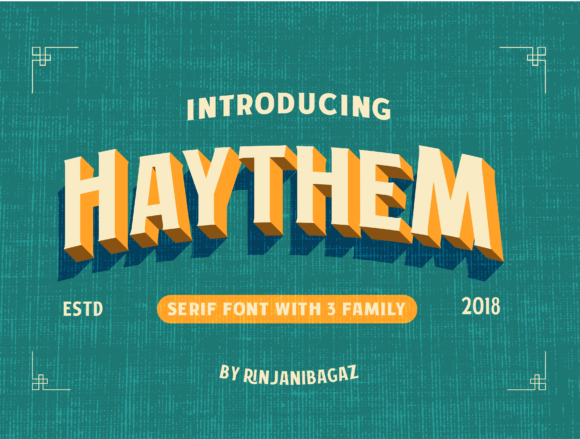
Haythem: A Stylish Serif Font for Authentic Creative Projects
Haythem is a versatile serif font that brings a touch of vintage charm to modern design. With three family members, it offers flexibility for various creative applications. Inspired by old tins, signage, and vintage posters, Haythem helps designers achieve an authentic look without the hassle of manually recreating retro elements.
Whether you're working on a branding project, designing labels, or creating signage, Haythem can enhance your workflow. Its clean lines and distinctive character make it ideal for logotypes, packaging, and editorial layouts. The font’s unique aesthetic allows it to blend seamlessly with both traditional and contemporary design styles.
Understanding Haythem in the Design Process
Integrating Haythem into your design process starts with understanding its purpose and potential. It's not just a font; it's a tool that influences the tone and visual identity of your work. Before selecting any typeface, consider the message you want to convey and the audience you're targeting.
For instance, if you're designing a label for a craft beer brand, Haythem can help evoke a sense of nostalgia and craftsmanship. If you're creating a logo for a boutique, it can add a touch of elegance and timelessness. The font’s versatility makes it suitable for a wide range of projects, from small business branding to large-scale marketing campaigns.
Using Haythem in Different Stages of a Project
Haythem can be used at various stages of a creative project. During the planning phase, it can help set the visual direction. When sketching out concepts, using Haythem can give a clearer idea of how the final design will look. This early integration can save time and reduce the need for revisions later on.
During the execution phase, Haythem can be applied to digital mockups, print samples, or web designs. Its compatibility with different design software ensures that it works smoothly across platforms. Whether you're using Adobe Illustrator, Photoshop, or InDesign, Haythem maintains its quality and readability.
After the project is complete, Haythem can still play a role in quality control. Ensuring consistency in typography across all materials is essential for maintaining a strong brand identity. By using Haythem consistently, you reinforce the visual language of your project and create a cohesive experience for your audience.
Haythem and Workflow Integration
One of the key benefits of Haythem is its ability to integrate into existing workflows. For professionals who rely on specific tools and processes, adding a new font should not disrupt their routine. Haythem is designed to be user-friendly, allowing designers to focus on creativity rather than technical challenges.
When working with a team, having a shared font library can streamline collaboration. By including Haythem in your design assets, team members can access it easily, ensuring that everyone is on the same page. This consistency is especially important in branding projects where visual coherence is crucial.
For freelancers and independent creators, Haythem can be a valuable addition to their toolkit. It allows them to offer clients a range of options while maintaining a high level of quality. The font’s adaptability means it can be used in multiple formats, from social media graphics to printed materials.
Practical Tips for Using Haythem
To get the most out of Haythem, start by experimenting with different weights and styles. Each member of the font family has its own characteristics, so choosing the right one depends on the context. For example, a bold weight might be more appropriate for headlines, while a lighter version could work well for body text.
Consider the size and spacing when using Haythem. While it’s highly readable, certain combinations may require adjustments to ensure clarity. Testing the font in different sizes and layouts can help identify any potential issues before finalizing a design.
When combining Haythem with other fonts, aim for balance. Pairing it with a sans-serif typeface can create contrast and visual interest. However, it’s important to maintain harmony between the fonts to avoid cluttering the design. A good rule of thumb is to use no more than two or three complementary fonts in a single project.
Haythem in Real-World Applications
Haythem is widely used in branding and packaging design. Small businesses often turn to this font to create a unique identity that stands out in a competitive market. Its vintage-inspired style gives products a handcrafted feel, which can resonate with customers looking for authenticity.
In the realm of apparel and merchandise, Haythem adds a classic touch to logos and tags. Whether it's a T-shirt design or a custom hoodie, the font enhances the overall aesthetic and reinforces the brand’s image. Its legibility ensures that details are clear and easy to read, even on smaller surfaces.
For educators and content creators, Haythem can be a useful tool in presentations and educational materials. It adds a professional yet approachable look to slides and handouts, making information more engaging. The font’s readability also supports accessibility, ensuring that all users can benefit from the content.
Long-Term Use and Maintenance
As with any design asset, maintaining Haythem over time is essential. Keeping a backup of the font files ensures that they remain accessible, even if the original source becomes unavailable. Organizing fonts in a centralized library can also improve efficiency, especially for teams that work on multiple projects simultaneously.
Regularly updating your design tools and software can help maintain compatibility with Haythem. New versions of design programs may introduce features that enhance the font’s performance, so staying up-to-date can provide additional benefits.
Finally, considering the long-term impact of Haythem on your projects is important. A well-chosen font can become a signature element of your brand, contributing to its recognition and success. By using Haythem thoughtfully, you can build a consistent and memorable visual identity.