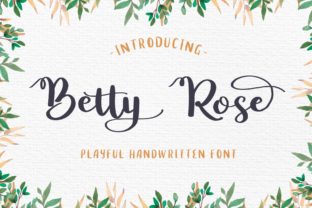
Betty Rose: A Handwritten Script That Brings Character to Digital Design
In the world of typography, the difference between a generic font and a unique one can be the line between ordinary and extraordinary. Betty Rose is a handwritten script font that stands out for its natural, organic feel. It captures the essence of real handwriting, making it an ideal choice for those looking to add a personal touch to their digital projects.
Unlike many digital fonts that aim for perfection, Betty Rose embraces imperfections. This intentional design choice gives the font a warm, human quality that resonates with both designers and end users. Whether used in branding, marketing materials, or personal projects, Betty Rose adds a sense of authenticity that can’t be replicated by more rigid typefaces.
The Unique Characteristics of Betty Rose
Betty Rose is crafted to mimic the irregularities found in actual handwriting. Each letterform has subtle variations, making the text appear as though it was written by hand rather than typed on a keyboard. This feature makes it particularly appealing for projects that require a personal, intimate feel.
The font includes a wide range of characters, including uppercase and lowercase letters, numbers, and punctuation. These elements are designed to flow naturally, creating a cohesive look that feels consistent yet expressive. The ligatures and alternates available in Betty Rose allow for greater customization, giving designers more control over the final output.
One of the standout features of Betty Rose is its versatility. While it’s primarily a script font, it can be paired with other typefaces to create balanced and visually engaging layouts. Its soft, flowing lines make it suitable for a variety of applications, from logos and headings to body text and captions.
Practical Applications of Betty Rose
Businesses and creatives across different industries have found value in using Betty Rose. In the fashion and e-commerce sectors, the font is often used to create eye-catching product labels, packaging designs, and social media posts. Its elegant yet approachable style aligns well with brands that want to project a sense of sophistication without appearing too formal.
Trend blogs and lifestyle websites also benefit from the use of Betty Rose. When used in headlines or featured text, the font adds a touch of personality that helps content stand out in a crowded digital space. Its readability at smaller sizes makes it a practical choice for blog post titles and subheadings.
Wedding boutiques and event planners frequently use Betty Rose for invitations, signage, and promotional materials. The font’s romantic, handcrafted aesthetic complements the theme of weddings and special occasions, offering a refined alternative to more traditional serif or sans-serif fonts.
Benefits of Using Betty Rose in Design Projects
One of the main advantages of Betty Rose is its ability to convey emotion through typography. The irregularity of the letters creates a sense of movement and energy, which can be especially effective in storytelling or narrative-driven designs. This emotional connection can enhance the overall impact of a message or brand identity.
Another benefit is the font’s adaptability. It works well in both print and digital formats, making it a valuable asset for multi-platform projects. Whether designing a website, a brochure, or a mobile app interface, Betty Rose maintains its visual appeal and legibility across different mediums.
For designers who want to add a unique touch to their work, Betty Rose offers a level of customization that few other fonts provide. The availability of alternate characters and stylistic sets allows for creative experimentation, helping to differentiate a project from others that use more common typefaces.
Considerations When Using Betty Rose
While Betty Rose is a powerful tool for adding character to design work, it’s important to use it thoughtfully. Because of its flowing, cursive style, it may not be the best choice for large blocks of text. In such cases, pairing it with a more readable font can help maintain clarity and accessibility.
Designers should also consider the context in which the font will be used. For example, a high-end luxury brand might find Betty Rose too informal, while a casual lifestyle brand could benefit from its relaxed, handmade appearance. Understanding the tone and audience of a project is essential when selecting a font like Betty Rose.
Additionally, it’s important to ensure that the font is properly licensed for the intended use. Depending on the project, different licensing options may be required, especially for commercial or public-facing applications. Checking the font’s license agreement before use can help avoid potential legal issues.
How Betty Rose Stands Out in the Market
In a market filled with countless font options, Betty Rose distinguishes itself through its emphasis on natural variation and human-like characteristics. While many script fonts aim for a polished, uniform look, Betty Rose celebrates the beauty of imperfection, making it a favorite among designers who appreciate authenticity.
This focus on realism has helped Betty Rose gain popularity in niche markets where a more personalized approach is valued. From independent artists to small businesses, users have found that the font enhances their visual identity in a way that feels genuine and meaningful.
As digital design continues to evolve, the demand for fonts that offer a human touch is growing. Betty Rose meets this need by providing a versatile, expressive typeface that can elevate a wide range of projects. Its unique qualities make it more than just a font—it’s a tool for creating something truly special.